
a novel experience that brings the metaverse into cars
Project Overview
As the final project in my Master's degree, as a team of 5 UX Designers and with our stakeholder Porsche Digital we wanted to focus on the mobility of future. Today’s cars are parked 95% of the time . As the utility of private car ownership is being increasingly questioned, we think the 5% of the time that we do spend in a car should become more meaningful . That is why we created beyond ; a platform that provides an entertaining and functional passenger experience that turns rides into memories.

Client
Porsche Digital & University of Barcelona

Period
January 2022 - July 2022

Role
UX Design, UX Research, UI Design, Graphic designer
Problem Statement
We were challenged by Porsche Digital to reimagine the passenger experience. In this context, we began to think about what lies ahead in the world of mobility, against the backdrop of recent technological advances.
While doing so, we encountered this startling statistic:
Today’s cars are parked 95% of the time.
— Fortune Magazine
This brought to our attention how little we actually interact with our vehicles on a daily basis. It is no wonder that the trend of shared mobility is gaining momentum, as more and more people look for alternatives to private car ownership.
User Research
Scope and Goals
Following the conclusion of our secondary research, our team had derived the following hypothesis:
We believe that time spent in an autonomous car would be more pleasurable if passengers could carry out additional activities.
We then proceeded to test it during our user research, as part of our Discover Phase. The goal of our user research was to eventually land on a defined problem statement and validate that we had identified the right problem to solve.
Methodology and Results
Stakeholder Interviews
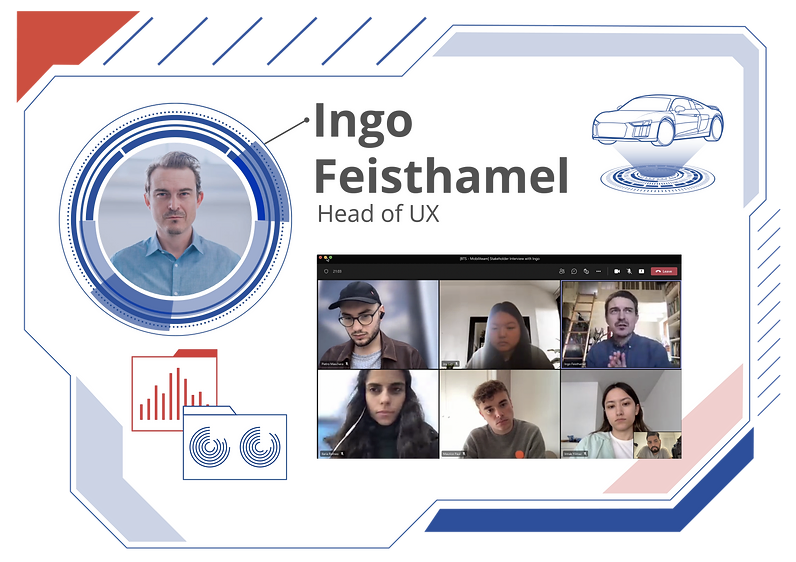
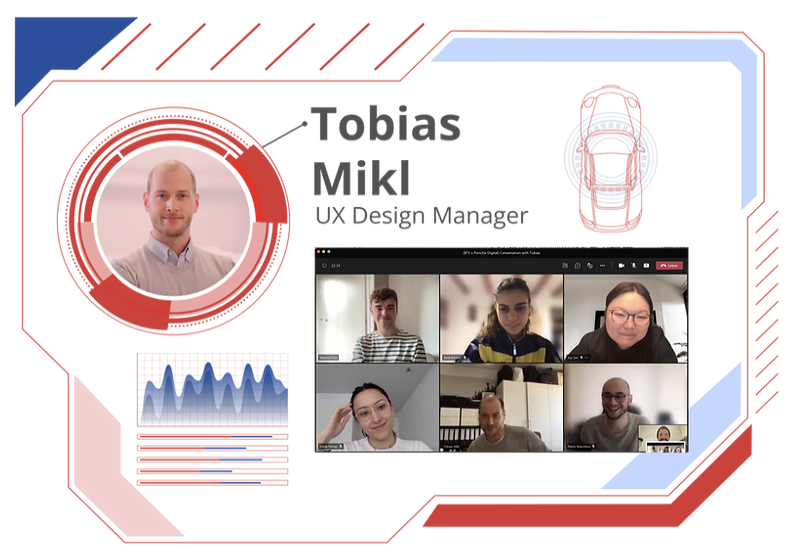
We had the privilege of speaking with two key members of Porsche Digital’s User Experience Design Team.
The objective of those conversations for us is to spend some time learning about who Porsche’s customers were , their specific problems and need gaps that our product may be expected to solve.
We were able to derive the following key takeaways:
- Porsche would like to become relevant to a younger audience, as well as more women.
- With the rise of autonomous vehicles, everyone would be a passenger in the future.
- Beyond the context of digital artwork, could NFTs also have a functional use case?
- Leverage Porsche’s fanbase with exclusive memorabilia and communities.
Focus Group
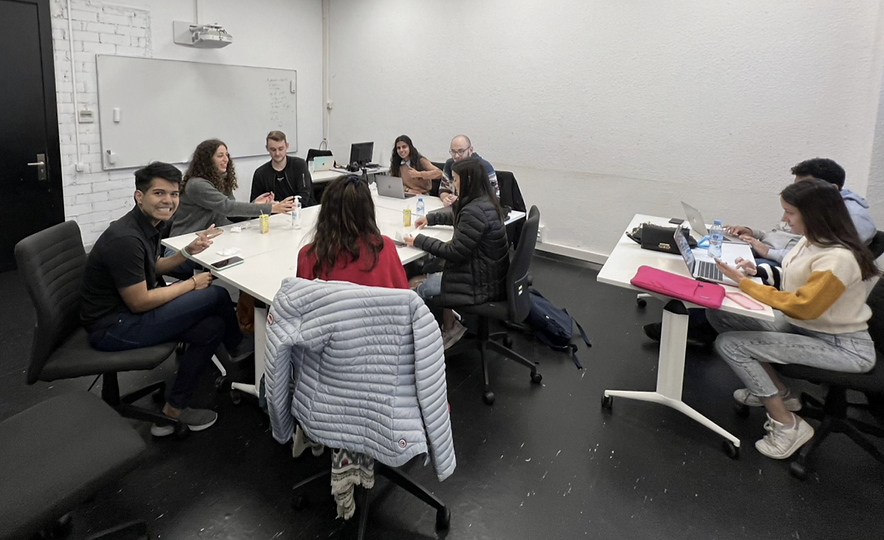
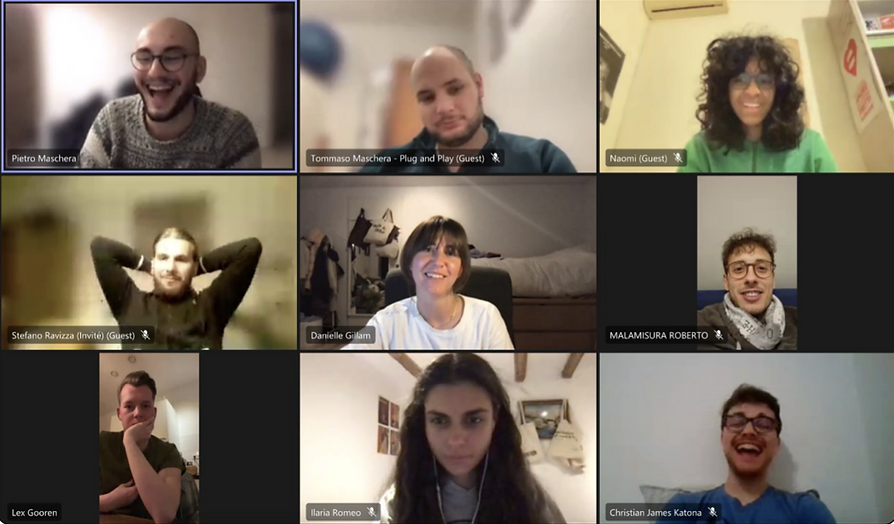
We conducted 2 focus group sessions, each lasting 2 hours in duration.
Cognizant of Porsche’s desire to connect with a younger demographic and more women, we assembled 14 university graduates from 9 countries of ages 23 33 years old, half of whom were women. During these conversations, we discussed the passenger experience , the future of private mobility, the metaverse and NFTs .
During the focus group sessions, we had the following observations:
- During a car ride, people can appreciate occasional boredom.
- Different activities appeal to different people at different times.
- People generally want to feel connected with others, particularly those in the car with them.
- Whilst open to the metaverse, participants were fearful of being cut off from the real world.
Learning & Insights
From our observations, we learned the following about people’s preferences when it comes to their passenger experience in a car:
- People want to choose whether to engage in an activity or not.
- They like having options in the types of available activities.
- They may prefer to connect or disconnect depending on context.
- They were generally receptive to the option of a mixed reality experience.
Decisions & Actions
From these insights, we decided to take the following action:
Therefore, we will develop a flexible passenger experience with options for users to adapt their car according to their varying needs and preferences at different times.
Personas
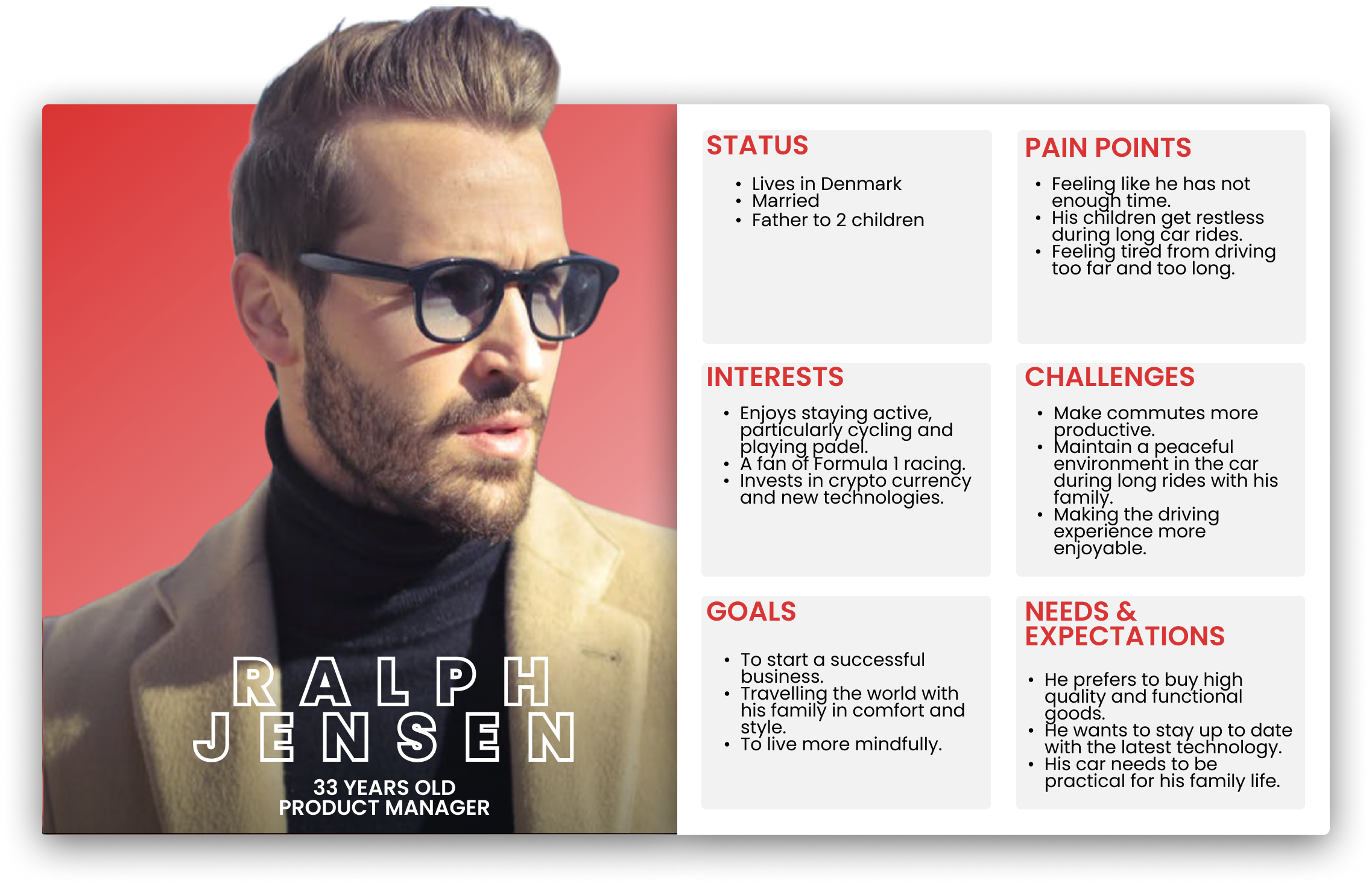
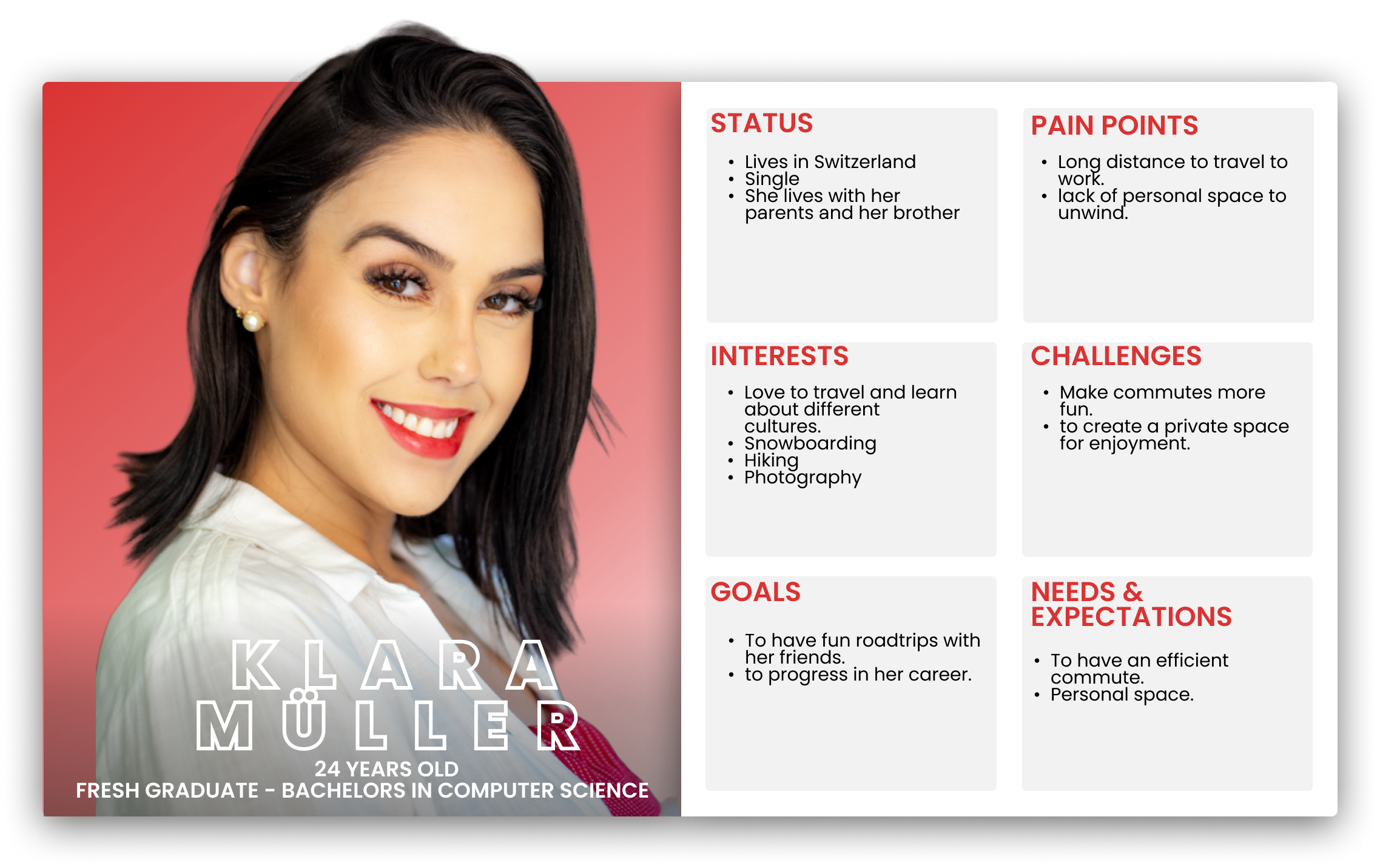
Product Conceptualisation
Value Proposition
Based on our vision to push the boundaries of what a car can be, we envisioned a novel passenger experience where the physical and digital realms could converge. We thus arrived at the following value proposition for beyond:
Beyond is a platform that provides an entertaining and functional passenger experience that turns rides into memories.
Our solution comprises three big trends in technology:

Autonomous Vehicles

NFTs

Metaverse
Our product creates value in the following ways:
Newness
Satisfies a new set of needs not previously perceived by customers.
Personalization
Provides a tailored experience to each customer, based on their needs and preferences.
Status
Offers prestige and superior quality associated with the Porsche brand.
Usability
Seamlessly integrates the vehicle with an easy-to-use interface.
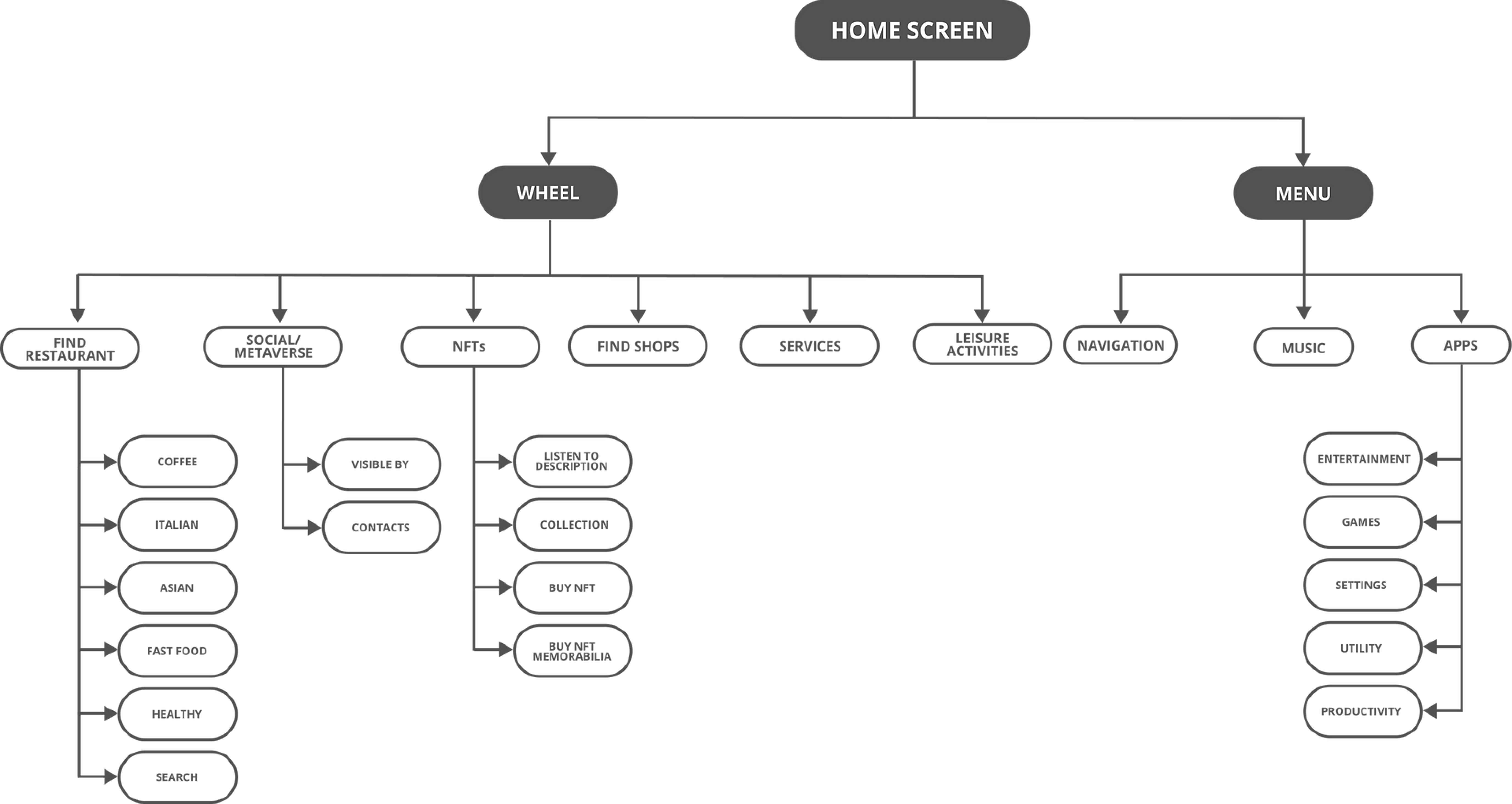
Information Architecture
User Testing
Low Fidelity Prototype
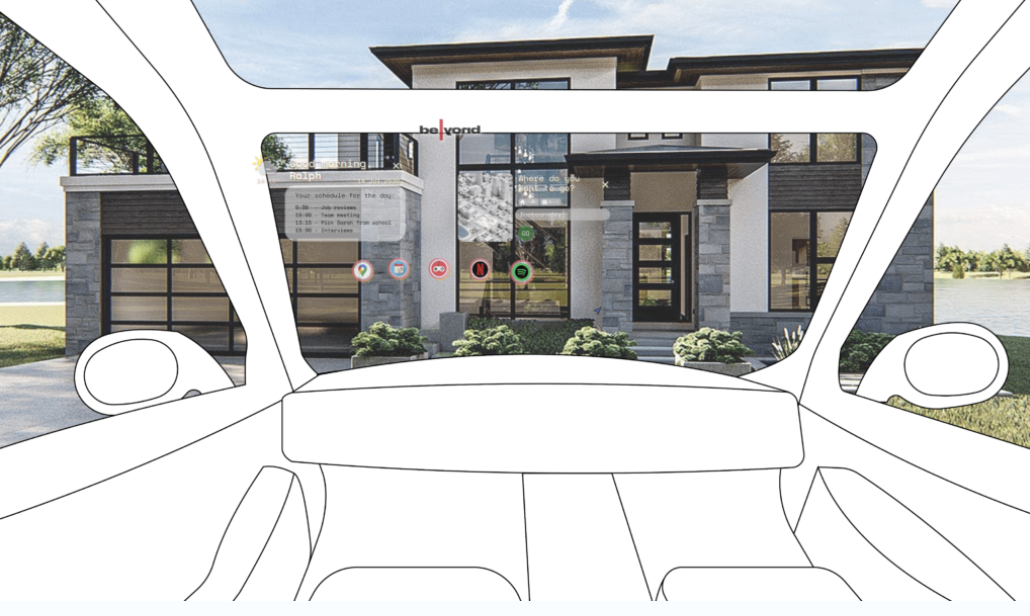
The first round of user testing was conducted on our low fidelity prototype and consisted in testing the concept behind our product. We created frames of what the product would potentially look like, showcasing its features.
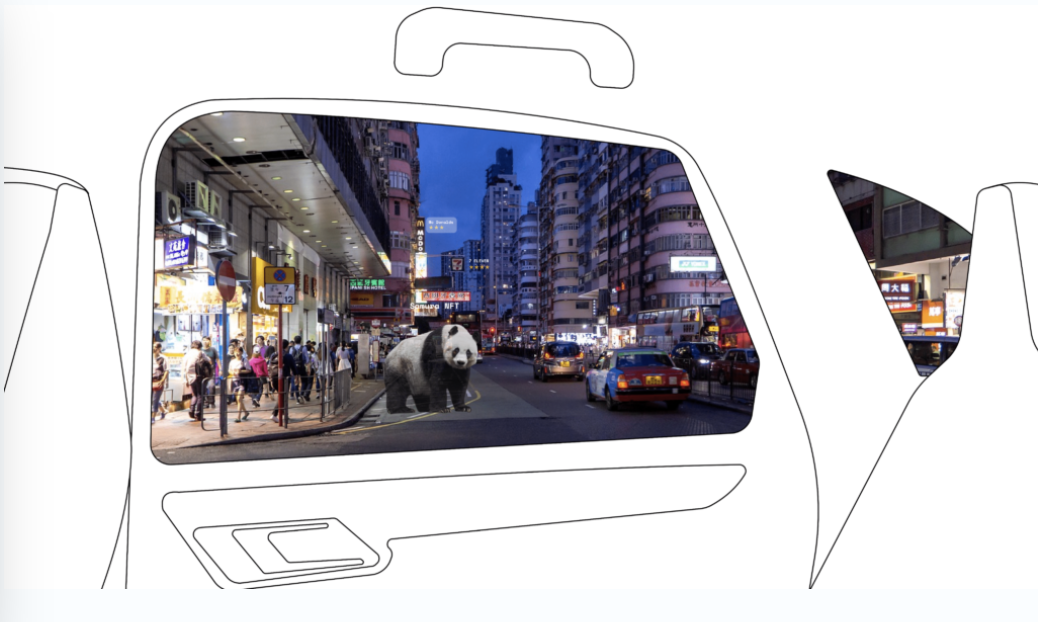
Determining Alignment With User Needs
Our goal was to find out whether the features we envisioned to include into our product were a fit for people’s needs, as well as if there was any other feature that users might want to see implemented.
6 Testing Sessions
Even though the frames we showed were static, we asked questions about what they thought would happen if they clicked on a certain element or how they would ideally accomplish a task.
Open-Ended Questions
The six moderated hybrid testing sessions were conducted on 6 participants in a week timeframe.
Results
Overall, we received positive feedback from our target users. The feedback can be broadly group into these categories:
Layouts
People suggest they would want the layout to be as close to smartphone as possible, mentioning elements such as customization, “widgets”, and the presence of a grid system. Users expect important information to be placed on the left side of the screen, and less important information or features to be kept of the home screen.
Concerns
Users have privacy concern about the type on content visible on their screen when other passengers are in the car. People want to have the possibility to easily turn of the system.
Activities
About the NFTs monuments, they mention that it would be nice to learn about the history of a place, to collect “digital souvenirs” and to have NFTs that complement the experiences, rather than representing distractions. People state they prefer functional activities rather than entertaining ones.
Analysis
We conducted affinity mapping and categorized the various feedback into major topics. Afterwards we prioritized the findings according to the relevance we assumed those had into the improvement of our products. The feedback collected was paramount to come up with the first wireframes and to decide which features to prioritise. We created an interface that would be as similar as it could to a smartphone or a desktop and placed the information in a way that we thought was intuitive and logical for users; we prioritised features that had less to do with games, and more with exploration and carrying out tasks or activities.
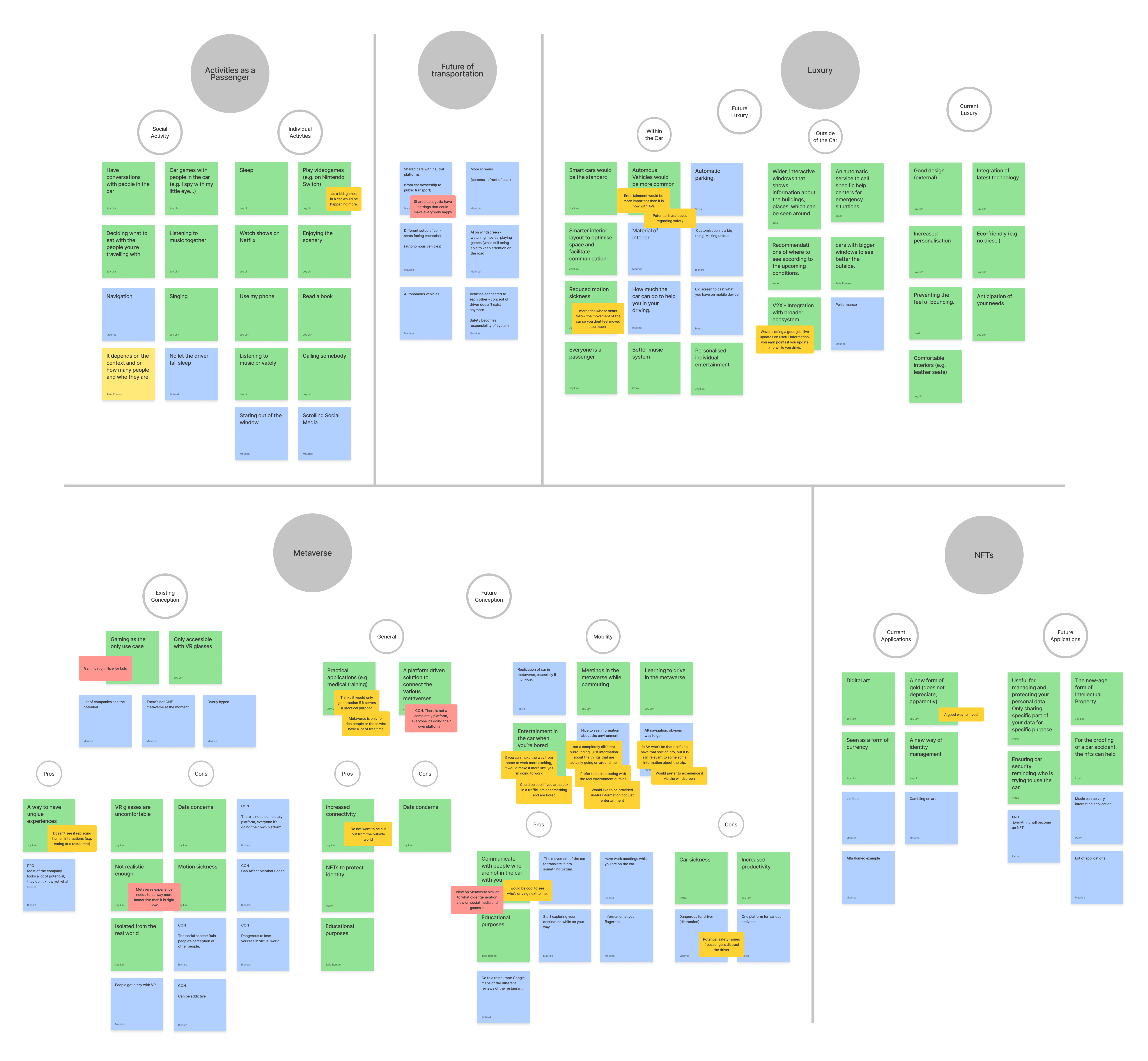
High Fidelity Prototype
The goal of our user testing was to evaluate the usability of our prototype and to gain feedback on how to improve it to make it more user-friendly.
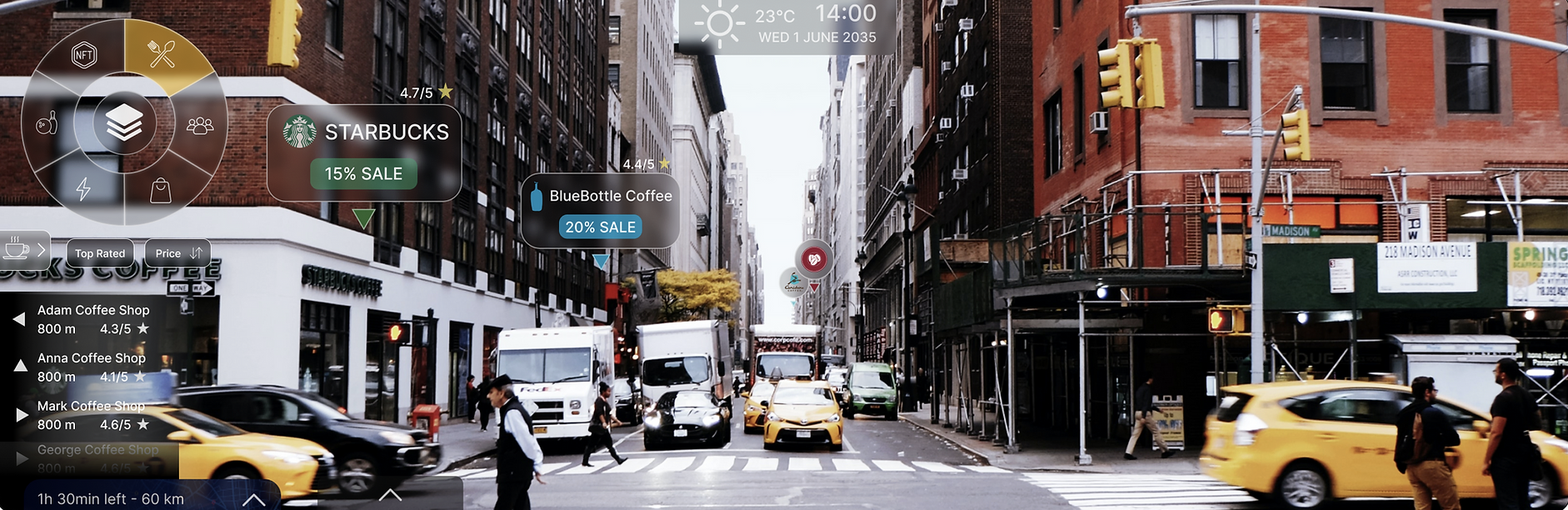
The product under test is our interactive AR windshield. In particular, the focus is on our main flow, which revolves around the core features of our product which are:
- Navigation
- Restaurant Layer
- They may prefer to connect or disconnect depending on context. They were generally receptive to the option of a mixed reality experience.
- They were generally receptive to the option of a mixed reality experience.
Participants
5 users (2 men and 3 women) were tested. The age range was between 23 and 35. Students or young professionals who had buying potential for technological products in 10 to 15 years time. They were interested in technology and articulate in providing feedback.
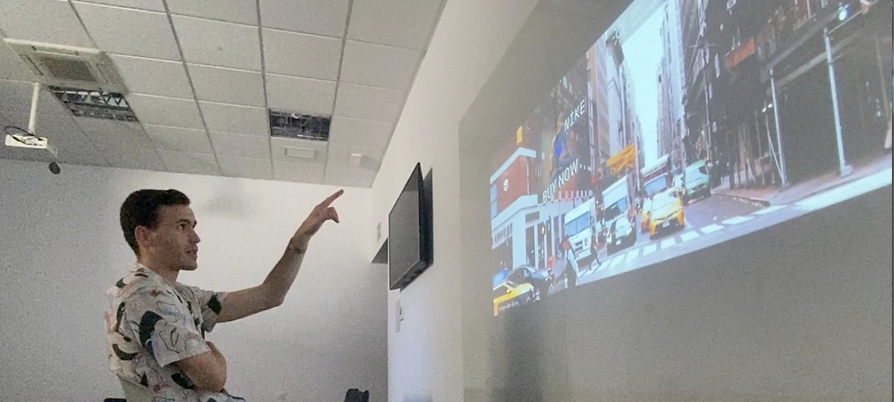
Key Findings
- The average usability score was 4.2 out of 5.
- Some UI elements were not spotted right away
- It was not clear to users how the social feature would function.
- Users would pay to not see AR ads anymore.
- Users would prefer targeted ads and content rather than random ones.
- Users’ validation were overall positive.
Conclusions
- To make elements more visible or clickable, consider adding some sort of visual cue, like a glimpse. Add labels below icons on the wheel menu.
- Clarify what are the consequences of selecting a certain call to action. For example, in the social feature, instead of saying "reaching out to," be more specific by saying "video call," or provide different button options.
- Specify payment methods when making a purchase, as well as the price where it is missing. Make sharing options clearer.
- Give feedback before leaving for the set destination.
- Find another way to show that the product you are buying comes from the ad. Rethink the social feature.
Brand Identity
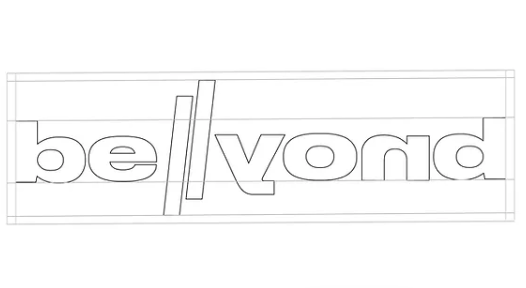
Logo
Color
Icon

Tone
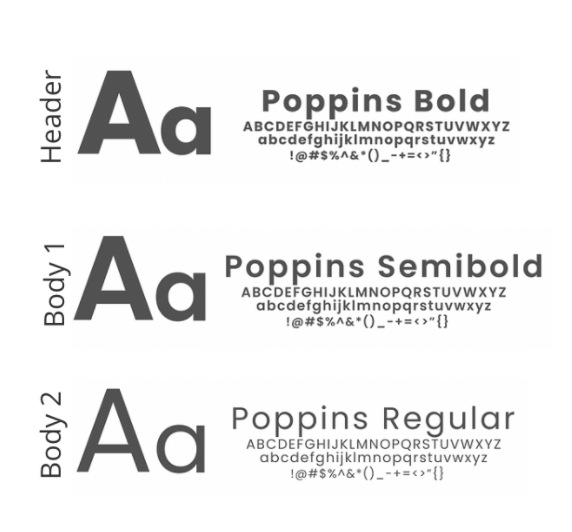
Typography
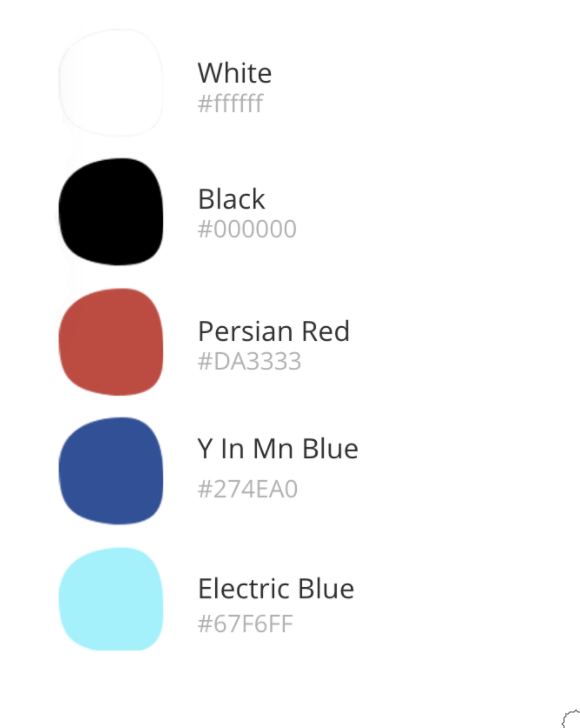
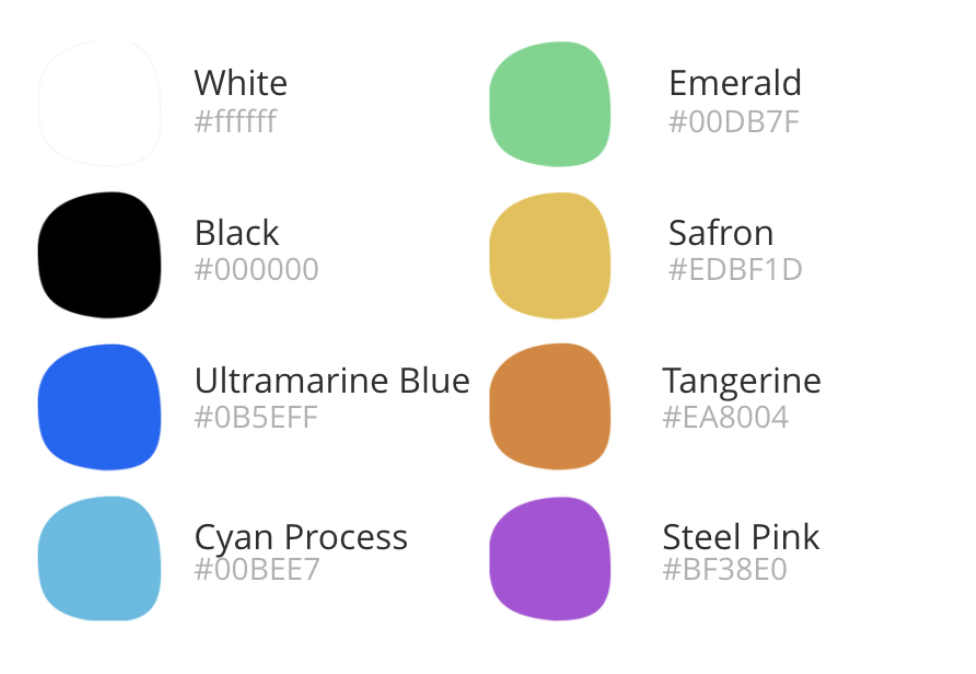
Color Palette
Prototype
Let's connect
Get in touch for opportunities or just to say hi! 👋